
🚚
🎁
Total: ₹0
Taxes and shipping calculated at checkout
Walk into a supermarket or browse an online grocery store today and you’ll see words like “clean label,” “natural,” “no added sugar,” “high protein,” “high fibre” and “preservative-free” everywhere.
But what do these terms actually mean?
The clean-label food trend is growing as consumers become more interested in ingredients, nutrition and transparency. But there’s also a lot of confusion around what “clean label” really means.
The simple answer? Clean label doesn't automatically mean healthy.
Let’s break it down.
What Does “Clean Label” Mean?
“Clean label” generally describes food products that focus on simple ingredients, transparency and recognisable components.
Consumers often associate clean-label products with:
However, clean label doesn't have one universal definition. It isn't a guarantee that a product is healthier.
That's why it's important to look beyond the words on the front of the pack.
Why Is Clean Label Trending?
1. People Are Reading Ingredients
Consumers are becoming more curious about what actually goes into their food.
Instead of simply asking “Does this look healthy?”, people are increasingly asking:
“What’s actually inside it?”
Ingredient transparency has become an important part of modern food shopping.
2. Protein Is Going Mainstream
Protein is no longer just a fitness trend.
From breakfast to everyday snacking, consumers are looking for convenient ways to include more protein in their diets.
But remember: high protein doesn't automatically mean healthy.
Check the complete nutrition profile before making a choice.
3. Sugar Awareness Is Growing
“Low sugar” and “no added sugar” are popular claims, but they aren't the same thing.
No added sugar does not necessarily mean sugar-free.
The nutrition panel gives you a clearer understanding of what you're consuming.
4. Social Media Is Changing Food Choices
Instagram, YouTube and other social platforms have made food and nutrition trends part of everyday conversations.
Protein, gut health, fibre, clean eating and functional foods are constantly trending.
The benefit? Consumers are more curious.
The downside? Not everything you see online is accurate.
That makes understanding food labels even more important.
Clean Label ≠ Healthy
This is the biggest misconception around the trend.
A product can have a short, simple ingredient list and still be high in calories, sugar, fat or sodium.
Similarly, a product with a longer ingredient list isn't automatically unhealthy.
Instead of judging a product by one claim, look at the complete nutritional picture.
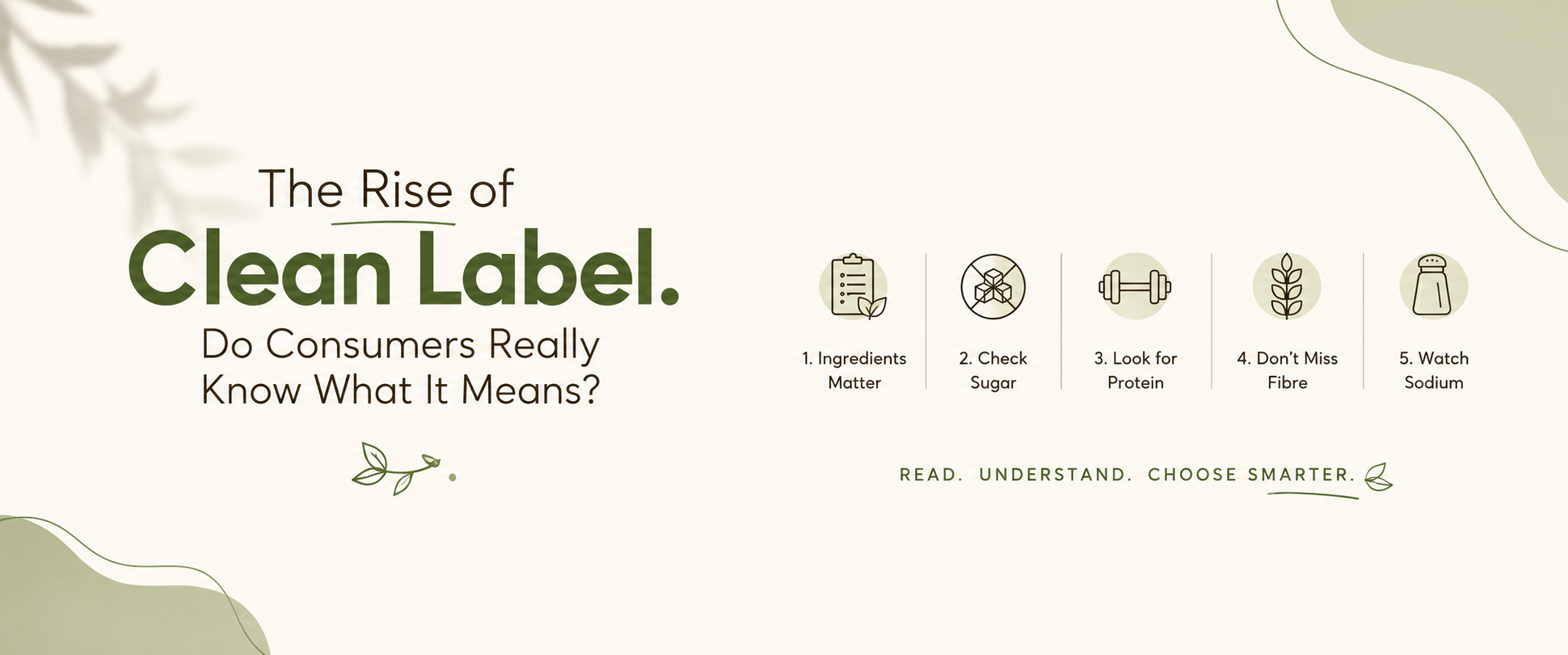
5 Things to Check on a Food Label
1. Ingredient List
Ingredients are generally listed by weight, so the first few ingredients can tell you a lot about the product.
2. Added Sugar
Check the nutrition information instead of relying only on claims such as “natural” or “no added sugar.”
3. Protein
Protein can be useful for making snacks more satisfying, but consider the serving size and overall nutrition too.
4. Fibre
Fibre is an important part of a balanced diet and is often overlooked when choosing snacks.
5. Sodium
Pay attention to sodium, especially when choosing savoury packaged snacks.
Natural Doesn't Always Mean Better
Another common assumption is:
Natural = Healthy.
Not necessarily.
Words such as natural, organic, traditional, wholesome and plant-based can describe aspects of a product, but they don't tell you everything about its nutritional value.
The best approach is simple:
Read the label. Understand the ingredients. Check the nutrition.
The New Era of Smart Snacking
The clean-label trend is part of a much bigger change in the way people snack.
Snacks today aren't only about satisfying hunger.
Consumers increasingly want food that is:
This doesn't mean every snack needs to be “perfect.”
It's about making better-informed choices more often.
So, What Should “Clean Label” Mean to You?
Instead of asking:
“Is this clean-label?”
Ask:
“Do I understand what I'm eating?”
Check the ingredients.
Look at the nutrition panel.
Understand the serving size.
Compare protein, fibre, sugar, fat and sodium.
And consider how that food fits into your overall diet.
The BigPantry Take
At BigPantry, we believe smarter snacking starts with knowing what you're eating.
Food doesn't need complicated claims or unrealistic promises.
It should offer a balance of taste, convenience and nutrition, while giving you enough information to make your own choice.
Because the future of snacking isn't about blindly following trends.
It's about knowing what's in your snack—and choosing smarter.

There is nothing in your cart lets add some items.


Subtotal ₹0
Shipping Charges Calculated on checkout


