
🚚
🎁
Total: ₹0
Taxes and shipping calculated at checkout
Namkeen is the taste of Indian evenings — and we're not here to pretend otherwise. But the difference between a fried sev mixture and a roasted trail mix is bigger than most labels let on. Here's the honest breakdown.
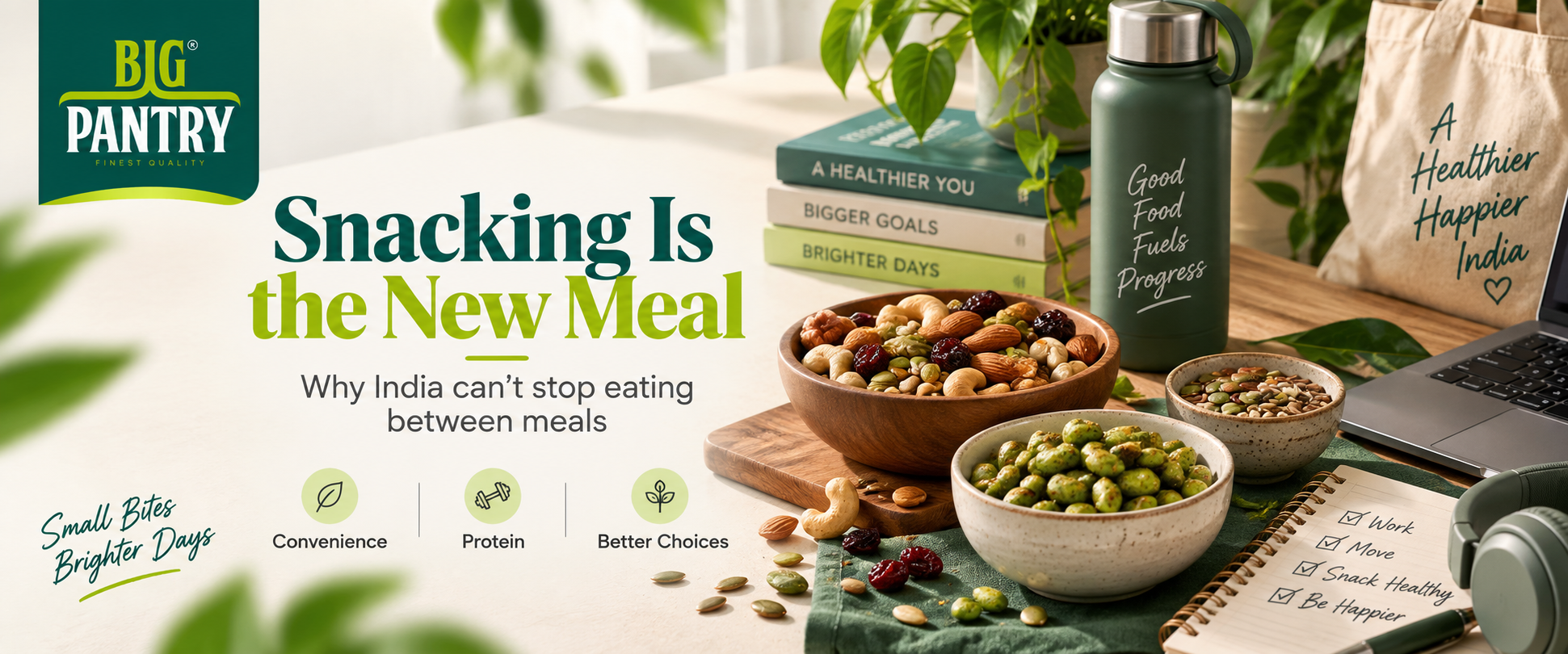
Most commercial namkeen starts with maida (refined flour) and besan extruded into sev, boondi and chiwda — then deep-fried in palm oil. A proper trail mix starts with what you can see: whole almonds, cashews, pumpkin and sunflower seeds, dried fruit. No flour vehicle, no frying oil as the second ingredient.
Deep-fried namkeen commonly carries 30–40g fat per 100g, most of it frying oil. In a dry-roasted mix, the fats present are the nuts' and seeds' own — the kind you actually want. Watch for the word games though: "baked" namkeen often still lists palm oil high up, and some "trail mixes" are fried too. The phrase to look for is roasted, never fried — and an oil-free ingredient list to back it.
Typical fried mixture: 10–12g protein per 100g, mostly from besan. A nut-and-seed trail mix: 15–20g, with far more fibre and minerals — which is why a handful of trail mix ends the craving while namkeen invites the next handful.
Here's where namkeen usually wins — flavour. Which is why we built our mixes around Indian seasoning instead of importing the bland American "trail mix" idea: our Spiced Trail Mix runs on black pepper, cumin, chilli and amchur; the Peri Peri Party Mix brings proper heat. Chatpata taste, roasted base.
Pass those three checks and eat happily — whatever the packet calls itself.

There is nothing in your cart lets add some items.


Subtotal ₹0
Shipping Charges Calculated on checkout


