
🚚
🎁
Total: ₹0
Taxes and shipping calculated at checkout
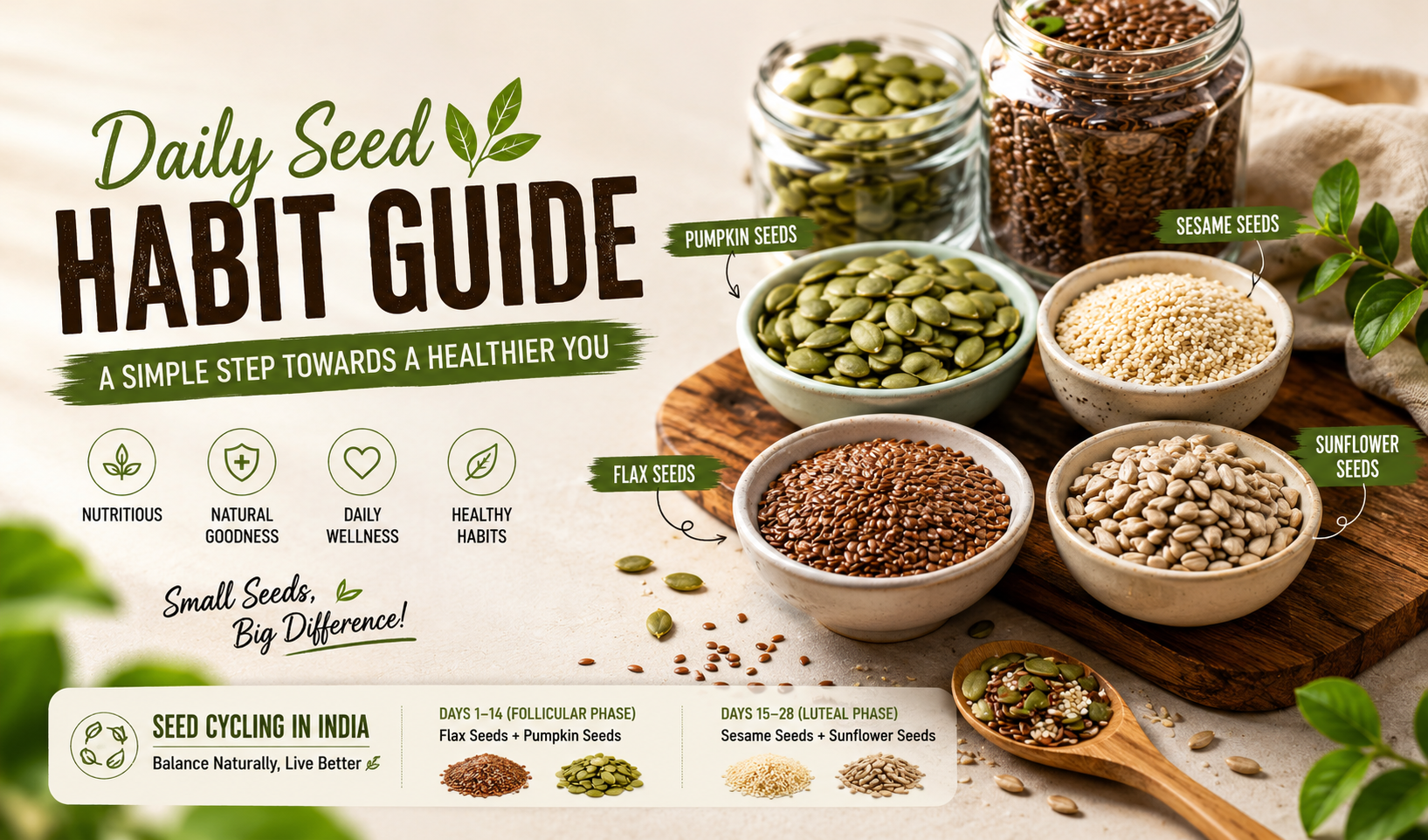
Healthy habits don't always require dramatic lifestyle changes. Sometimes, the smallest additions to your daily routine can make a meaningful difference over time.
One such habit that has gained attention among health-conscious individuals is seed cycling. While research on seed cycling itself is still limited, many people choose to include a variety of nutrient-rich seeds in their diets because they provide fibre, healthy fats, protein, vitamins, and minerals that support overall wellness.
Whether you're already familiar with chia seeds and flax seeds or you're just beginning your wellness journey, this guide explains seed cycling in India, the seeds commonly used, how to include them in everyday meals, and simple ways to build a sustainable daily seed habit.
Seed cycling is a dietary practice that involves eating different types of seeds during different phases of the menstrual cycle.
Traditionally, it includes:
| Days of Cycle | Seeds Commonly Used |
|---|---|
| Days 1–14 (Follicular Phase) | Flax Seeds + Pumpkin Seeds |
| Days 15–28 (Luteal Phase) | Sesame Seeds + Sunflower Seeds |
The idea behind seed cycling is based on the nutritional profile of these seeds, particularly their healthy fats, fibre, lignans, vitamins, and minerals.
While many people follow seed cycling as part of their wellness routine, it's important to note that scientific evidence supporting seed cycling specifically remains limited. Most nutrition experts agree that eating a variety of seeds is beneficial because of their overall nutrient content, rather than because of a specific cycling schedule.
Although tiny, seeds are packed with nutrients.
Different seeds contribute different health benefits, making them a valuable addition to a balanced diet.
Plant-based protein
Dietary fibre
Healthy unsaturated fats
Omega-3 fatty acids
Magnesium
Zinc
Iron
Calcium
Vitamin E
Antioxidants
Rather than relying on a single type of seed, eating a variety helps provide a broader range of nutrients.
Flax seeds are one of the richest plant sources of omega-3 fatty acids (ALA).
They also contain lignans and dietary fibre, making them a popular choice in healthy diets.
Easy ways to eat flax seeds:
Sprinkle over oats
Add to smoothies
Mix into curd
Blend into atta for rotis
Pumpkin seeds provide:
Plant protein
Magnesium
Zinc
Iron
Healthy fats
Their mild flavour makes them suitable for salads, breakfast bowls, soups, and roasted snacks.
Sunflower seeds are naturally rich in:
Vitamin E
Selenium
Healthy fats
They add crunch to salads, sandwiches, granola, and homemade trail mixes.
Sesame seeds have been used in Indian cooking for centuries.
They provide:
Calcium
Iron
Healthy fats
Copper
Common Indian dishes already include sesame seeds in chutneys, laddoos, til chikki, and vegetable preparations.
Whether you choose to follow seed cycling or simply enjoy different seeds throughout the week, consistency is more important than perfection.
Here are easy ways to include seeds in your daily meals.
Add chia or flax seeds to overnight oats.
Sprinkle pumpkin seeds over yogurt.
Mix sunflower seeds into muesli.
Enjoy a small handful of mixed seeds instead of processed snacks.
Sprinkle roasted pumpkin or sunflower seeds over salads, soups, dal, or grain bowls.
Prepare a homemade trail mix using:
Pumpkin seeds
Sunflower seeds
Almonds
Cashews
Raisins
Add sesame seeds to stir-fried vegetables or use them as a garnish for Indian curries.
There is currently limited clinical research proving that seed cycling directly balances hormones or regulates menstrual cycles.
However, nutrition professionals generally agree on one point:
Including a variety of seeds as part of a balanced diet can contribute valuable nutrients that support overall health.
If you're experiencing hormone-related concerns or menstrual irregularities, it's always best to consult a qualified healthcare professional.
Seed cycling should be viewed as a nutritional habit—not a medical treatment.
A practical serving size for most adults is:
1–2 tablespoons (15–30 grams) of seeds per day
This provides a good balance of nutrients without excessive calorie intake.
Combining different seeds throughout the week can help increase dietary variety.
Many people wonder whether they need to follow the traditional seed cycling schedule.
The answer depends on personal preference.
If your goal is simply improving your overall nutrition, regularly eating a variety of seeds may be easier and more sustainable than following a strict schedule.
Both approaches encourage greater consumption of nutrient-dense foods.
Scientific research specifically supporting seed cycling is currently limited. Most evidence relates to the nutritional benefits of the individual seeds rather than the cycling method itself.
Absolutely.
The nutritional benefits of seeds—including fibre, healthy fats, protein, and minerals—are valuable for everyone.
Yes.
Many people enjoy mixed seed blends that include pumpkin, sunflower, flax, and chia seeds as part of a balanced diet.
Pumpkin seeds, sunflower seeds, flax seeds, and chia seeds are excellent starting points because they are easy to incorporate into everyday meals.
Store seeds in airtight containers in a cool, dry place.
Because seeds contain healthy oils, refrigeration after opening helps maintain freshness for longer.
When buying seeds, look for products that are:
100% natural
Fresh and hygienically packed
Free from added preservatives
Properly sealed for freshness
Sourced from trusted suppliers
Quality matters because fresh seeds retain their natural flavour and nutritional value.
Building healthier eating habits doesn't have to be complicated.
Whether you choose to follow seed cycling in India or simply include a variety of nutrient-rich seeds in your daily meals, consistency is what matters most.
Pumpkin seeds, flax seeds, sunflower seeds, sesame seeds, and chia seeds each bring unique nutritional benefits that can help diversify your diet.
At BigPantry, you'll find a carefully curated range of premium-quality seeds, including pumpkin seeds, chia seeds, flax seeds, basil seeds, and sunflower seeds—carefully sourced and hygienically packed to make healthy eating simple every day.
Start small, stay consistent, and let every spoonful bring you one step closer to a healthier lifestyle.

There is nothing in your cart lets add some items.


Subtotal ₹0
Shipping Charges Calculated on checkout


