
🚚
🎁
Total: ₹0
Taxes and shipping calculated at checkout
When hunger strikes between meals, most of us reach for something quick: biscuits, chips, namkeen or whatever is available in the kitchen drawer.
These snacks may satisfy a craving temporarily, but they often do not keep you full for long. That is why more people are now looking for snacks that provide meaningful nutrition along with flavour and crunch.
Three popular options often come up in this conversation: edamame, roasted chana and almonds.
Roasted chana has been part of Indian households for generations. Almonds are widely known as a nutrient-rich everyday food. Edamame is comparatively newer in Indian snack cupboards, but its high protein content has quickly made it popular among fitness enthusiasts and health-conscious consumers.
So, when comparing edamame vs chana vs almonds, which one is the best high-protein Indian snack?
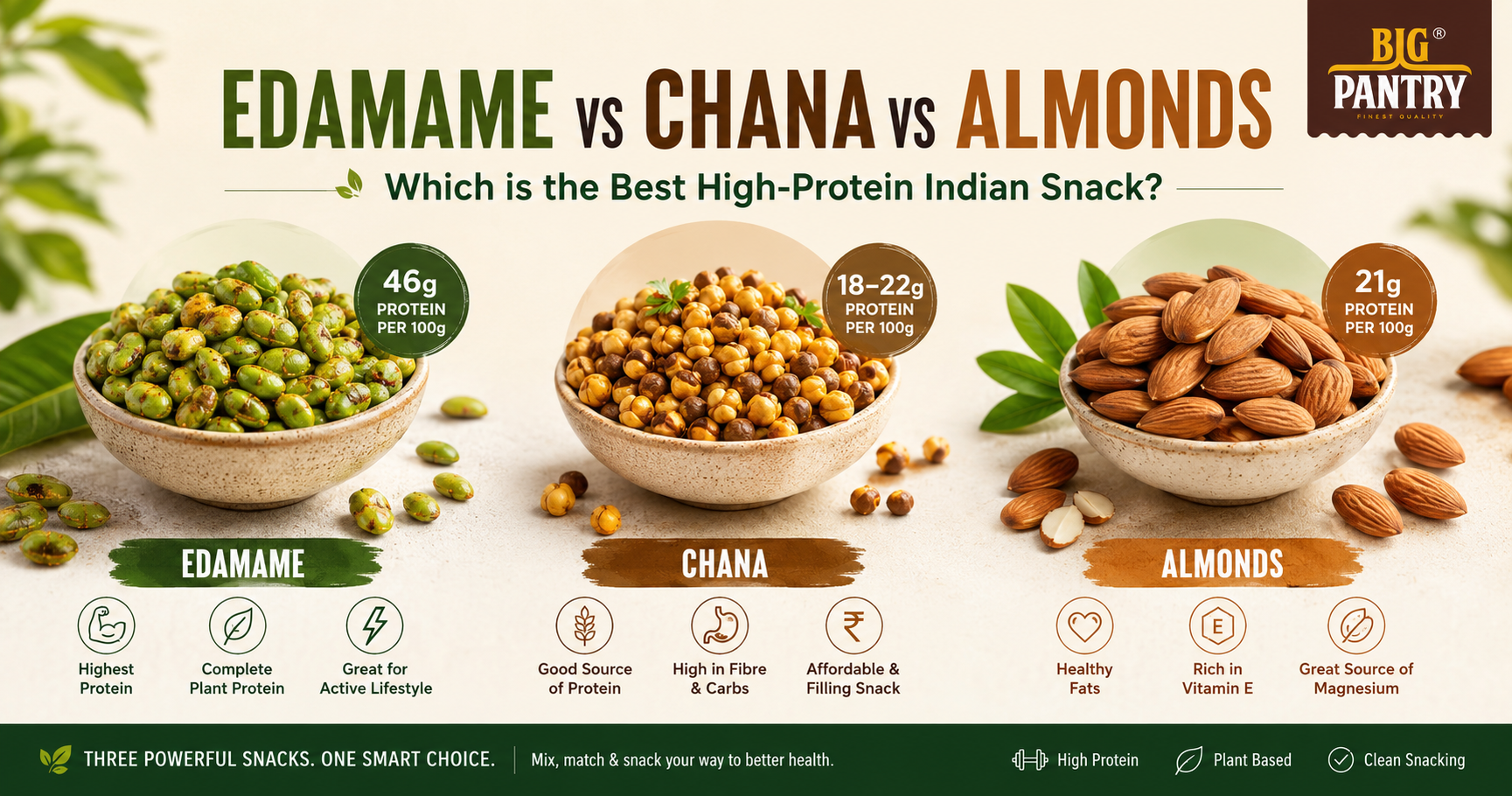
The answer depends on what you need. Edamame leads in protein density, chana is affordable and filling, while almonds are rich in healthy fats and vitamin E. Let us compare all three in detail.
What Is Edamame?
Edamame refers to young soybeans harvested before they fully mature. They are naturally green, mildly nutty and commonly eaten steamed, boiled or roasted.
Fresh edamame is soft and usually served in pods. Roasted edamame, however, has a crunchy texture and is much easier to carry as an everyday snack.
Because edamame comes from soybeans, it is naturally rich in plant protein. Soy is also considered a complete protein source because it contains all nine essential amino acids that the body needs from food.
This makes roasted edamame especially useful for:
BigPantry Roasted Edamame Beans provide 46 grams of protein per 100 grams, making them one of the most protein-dense options in the BigPantry range.
What Is Roasted Chana?
Roasted chana is made by roasting chickpeas until they become dry and crunchy. It is one of India’s oldest and most familiar snack foods.
It is available in several forms, including plain roasted chana, salted chana, masala chana and chana with the skin removed.
Roasted chana contains a useful combination of:
It may not contain as much protein as roasted edamame, but it is affordable, easily available and satisfying. Its carbohydrate content also makes it useful when you want both energy and fullness from your snack.
Chana can be eaten on its own or mixed with onion, tomato, coriander, lemon juice and chaat masala for a simple homemade snack.
What Do Almonds Offer?
Almonds are nutrient-dense nuts known for their rich flavour and crunchy texture.
They provide plant protein, but they are especially valued for their healthy fats, vitamin E and magnesium. Their fat content makes them more calorie-dense than roasted chana and edamame, so portion size is important.
Almonds work well as:
They may not win the protein comparison, but they bring a different nutritional advantage to the table.
Edamame vs Chana vs Almonds: Nutrition Comparison
Nutritional values can vary depending on the variety, preparation method, roasting process, oil, salt and seasoning used.
Here is a simple approximate comparison:
|
Snack |
Approximate protein per 100g |
Approximate protein per 30g serving |
Best known for |
|
BigPantry Roasted Edamame |
46g |
13.8g |
High protein density |
|
Roasted chana |
Around 18–22g |
Around 5–7g |
Protein, fibre and carbohydrates |
|
Almonds |
Around 21g |
Around 6g |
Healthy fats, vitamin E and magnesium |
Based on protein alone, roasted edamame provides more than twice the protein of a similar serving of chana or almonds.
However, each snack serves a different purpose, which is why it is helpful to compare them beyond protein.
Which Snack Has the Most Protein?
If your main goal is protein, roasted edamame is the clear winner.
A 30-gram serving of BigPantry Roasted Edamame provides approximately 13.8 grams of protein. A similar serving of almonds or roasted chana generally provides around 6 grams.
This makes edamame particularly helpful when you want to increase protein intake without eating a large quantity of food.
It can be especially useful as:
Edamame also offers something many vegetarian snacks do not: complete plant protein.
Which One Keeps You Fuller?
Protein, fibre and fat can all contribute to satisfaction after eating.
Edamame is high in protein, which may help make your snack feel more substantial.
Roasted chana contains both protein and fibre, along with carbohydrates. This makes it a balanced option when you want energy and fullness together.
Almonds contain protein and healthy fats. Even a small portion can feel satisfying, but it is easy to eat more than intended because nuts are calorie-dense.
For portion-friendly snacking, measure a small serving instead of eating directly from a large packet or jar.
Which Is Best for Weight Management?
No single snack can cause weight loss on its own. Weight management depends on your complete eating pattern, activity levels, sleep, portions and lifestyle.
However, choosing a snack with protein, fibre or healthy fats can be more satisfying than choosing refined snacks such as biscuits, wafers or sugary foods.
Here is how the three options compare:
Edamame
Edamame provides a high amount of protein in a relatively small serving. It may be suitable when you want a protein-rich snack without relying on protein shakes or bars.
Chana
Chana is filling, affordable and rich in both fibre and carbohydrates. It works well for people who need a satisfying mid-morning or evening snack.
Almonds
Almonds can help make a snack feel satisfying because of their fat content. However, portion control matters because they provide more calories per gram.
The best choice is the one that fits your daily calorie needs and helps you avoid frequent mindless snacking.
Which Is Better Before a Workout?
Before exercise, the body generally benefits from easily available energy.
Roasted chana can be useful because it provides carbohydrates along with some protein. You can pair it with a banana or another fruit before a longer workout.
Almonds can also be eaten before exercising, but their higher fat content may digest more slowly. Some people may find a large almond serving too heavy immediately before a workout.
Edamame provides protein, but it can be paired with fruit when additional carbohydrates are needed.
Which Is Better After a Workout?
For a protein-focused post-workout snack, roasted edamame stands out.
Its high protein content means you can receive a meaningful amount of plant protein from a moderate portion.
However, a complete post-workout meal should ideally contain:
You can pair roasted edamame with fruit, a whole-grain meal or another source of carbohydrates depending on your routine.
Which One Is Best for Office Snacking?
All three are convenient, but they offer different experiences.
Edamame is ideal when you want something crunchy, protein-rich and different from everyday namkeen.
Roasted chana is affordable, familiar and easy to store in an office drawer.
Almonds are compact, mess-free and suitable for short breaks, although a small measured portion is recommended.
A mixed snack box containing all three can add variety while preventing boredom.
Can You Eat Edamame, Chana and Almonds Together?
Yes. Combining them can create a balanced homemade trail mix with different textures and nutrients.
Try this simple high-protein trail mix:
You can also add a small amount of raisins or dried cranberries for natural sweetness.
Keep the seasoning moderate, especially if the ingredients are already salted.
What Should You Check Before Buying?
Not every roasted snack is automatically healthy. The way it is prepared matters.
Before buying, check for:
Choose plain or lightly seasoned products whenever possible. Heavy salt, excessive oil or sugar coatings can reduce the everyday appeal of an otherwise nutritious ingredient.
Edamame vs Chana vs Almonds: Which One Should You Choose?
Here is the easiest way to decide:
Choose Roasted Edamame If:
Choose Roasted Chana If:
Choose Almonds If:
Final Verdict
When comparing edamame vs chana vs almonds, there is no single option that wins in every category.
Roasted chana is the most familiar and economical choice. Almonds provide protein together with healthy fats, vitamin E and magnesium. But when the goal is finding the most protein-dense option, roasted edamame takes the lead.
With 46 grams of protein per 100 grams, BigPantry Roasted Edamame Beans provide more than twice the protein found in a similar amount of roasted chana or almonds.
That does not mean you need to choose only one.
A balanced pantry can include all three:
Healthy snacking is not about following trends or eating one “perfect” food. It is about choosing convenient foods that provide useful nutrition and fit naturally into your lifestyle.
Frequently Asked Questions
Is edamame better than chana?
Edamame contains more protein per 100 grams, while chana offers a useful combination of protein, fibre and carbohydrates at a more affordable price.
Is edamame better than almonds for protein?
Yes. Roasted edamame generally provides significantly more protein than almonds by equal weight. Almonds, however, provide more healthy fats and vitamin E.
Can roasted edamame be eaten every day?
It can be included regularly as part of a varied diet. Choose a suitable portion and check the sodium level of flavoured varieties. People with a soy allergy should avoid edamame.
How much should I eat in one serving?
A serving of around 25–30 grams is practical for most snack occasions. Individual requirements may differ depending on appetite, activity and overall diet.
Which is the best high-protein Indian snack?
Among edamame, chana and almonds, roasted edamame provides the highest protein content per 100 grams. Chana and almonds remain nutritious choices for other dietary goals.
Ready to Upgrade Your Snack Drawer?
Explore BigPantry Roasted Edamame Beans—a crunchy vegetarian snack with 46g protein per 100g.
Enjoy them straight from the jar, carry them to work, pack them for travel or mix them with chana, almonds and seeds for a delicious homemade trail
Shop BigPantry Roasted Edamame Beans and make every snack count.


There is nothing in your cart lets add some items.


Subtotal ₹0
Shipping Charges Calculated on checkout


