
🚚
🎁
Total: ₹0
Taxes and shipping calculated at checkout
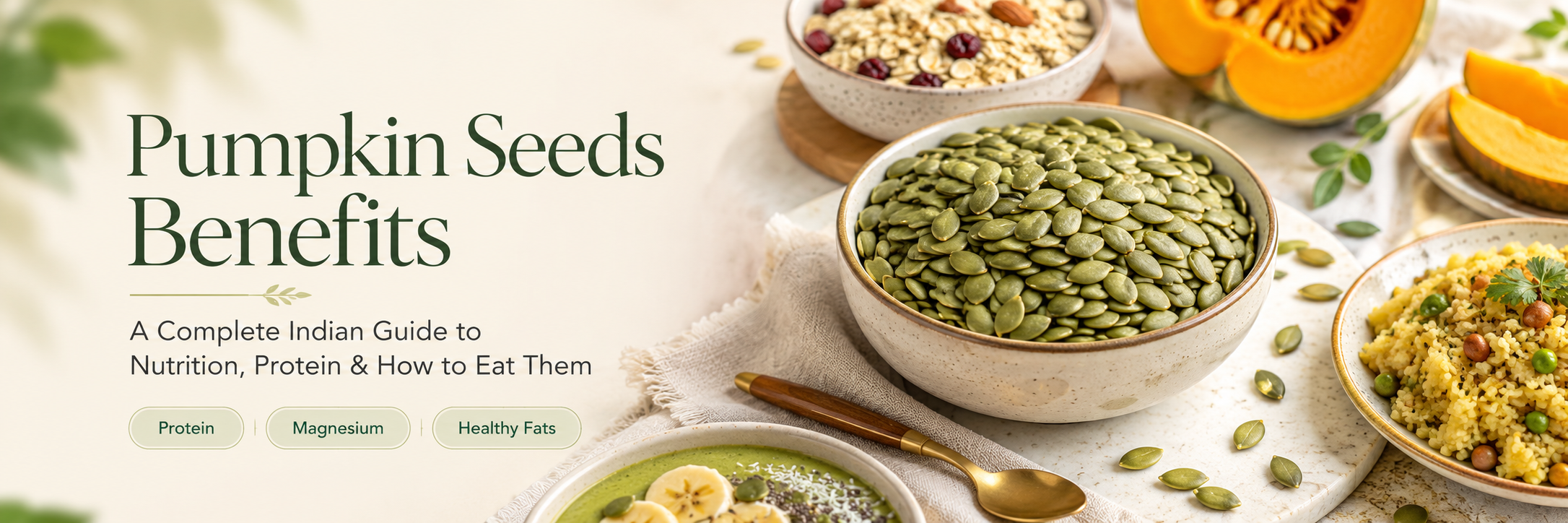
Have you ever scooped out the seeds from a pumpkin and thrown them away?
You're not alone.
For years, many Indian households treated pumpkin seeds (kaddu ke beej) as waste. Today, they're one of the most talked-about superfoods—and for good reason. These tiny green seeds are packed with protein, healthy fats, fibre, magnesium, zinc, and antioxidants, making them an easy way to add more nutrition to your daily diet.
The best part? You don't need to change your eating habits. A small handful of pumpkin seeds can be sprinkled over your breakfast, mixed into your evening snack, or added to your favourite Indian dishes.
In this guide, we'll explore the pumpkin seeds benefits, their nutritional value, how to eat them, and the best ways to include them in an Indian lifestyle.
What Are Pumpkin Seeds?
Pumpkin seeds are the edible seeds found inside pumpkins. Once cleaned and dried, they can be eaten raw or lightly roasted.
Known as kaddu ke beej in Hindi, they're naturally rich in nutrients and have a mild, nutty flavour that pairs well with both sweet and savoury dishes.
You can buy them in two forms:
For everyday snacking and cooking, shelled pumpkin seeds are the most convenient option.
Pumpkin Seeds Nutrition: Small Seeds, Big Nutrition
One of the biggest reasons pumpkin seeds are called a superfood is their impressive nutritional profile.
Per 100 grams, pumpkin seeds provide approximately:
This combination makes pumpkin seeds a nutrient-dense snack that's easy to include in a balanced diet.
Top Pumpkin Seeds Benefits
1. A Great Source of Plant Protein
2. Supports Heart Health
3. Helps Support Immunity
4. May Help You Feel Fuller for Longer
5. Rich in Magnesium
6. Supports Healthy Skin and Hair
How to Eat Pumpkin Seeds
One of the best things about pumpkin seeds is how versatile they are.
Here are some easy ways to enjoy them:
Sprinkle Over Breakfast
Add them to:
Mix into Indian Meals
Pumpkin seeds pair surprisingly well with:
Blend into Smoothies
A spoonful of pumpkin seeds adds texture and nutrition to fruit smoothies.
Make a Healthy Trail Mix
Mix pumpkin seeds with:
It's a quick snack that's perfect for work, travel, or school.
Eat Them as a Snack
Lightly roasted pumpkin seeds are delicious on their own and make a satisfying alternative to processed snacks.
How Many Pumpkin Seeds Should You Eat Daily?
Moderation is key.
For most adults, 20–30 grams per day (roughly one small handful) is a suitable serving as part of a balanced diet.
Eating more isn't necessarily better.
Pair pumpkin seeds with a variety of fruits, vegetables, whole grains, legumes, and other nuts and seeds for the best nutritional balance.
Raw vs Roasted Pumpkin Seeds
Both are nutritious, but they have slightly different qualities.
|
Raw Pumpkin Seeds |
Roasted Pumpkin Seeds |
|
Softer texture |
Crunchier texture |
|
Mild flavour |
Richer, nuttier flavour |
|
Retains natural nutrients |
Great for snacking |
|
Best for smoothies |
Best for trail mixes |
For maximum flavour without unnecessary ingredients, choose lightly roasted pumpkin seeds without excessive salt or oil.
Common Mistakes to Avoid
To get the most from pumpkin seeds, avoid these common mistakes:
Remember, pumpkin seeds work best as part of an overall balanced diet.
Expert Tips for Buying Pumpkin Seeds
When shopping, look for:
✔ Fresh, green seeds
✔ Airtight packaging
✔ No unnecessary preservatives
✔ Minimal added salt or oil
✔ A trusted brand with good quality standards
Freshness makes a noticeable difference in both taste and nutrition.
Quick Nutrition Checklist
Here's why pumpkin seeds deserve a place in your pantry:
✔ High in plant protein
✔ Rich in magnesium
✔ Good source of zinc
✔ Contains healthy fats
✔ Provides dietary fibre
✔ Easy to add to Indian meals
✔ Delicious as a daily snack
Frequently Asked Questions
Are pumpkin seeds healthy?
Yes. Pumpkin seeds are naturally rich in protein, healthy fats, fibre, magnesium, and zinc, making them a nutritious addition to a balanced diet.
Can I eat pumpkin seeds every day?
Yes, a moderate serving of around 20–30 grams per day can be included as part of a healthy eating pattern.
Are pumpkin seeds good for weight management?
Their combination of protein and fibre may help you feel fuller for longer, making them a satisfying snack choice.
What is the best time to eat pumpkin seeds?
They can be enjoyed at any time of the day—as a breakfast topping, midday snack, or evening munch.
Final Thoughts
When it comes to everyday nutrition, sometimes the smallest foods make the biggest difference.
The many pumpkin seeds benefits—from plant protein and healthy fats to magnesium, zinc, and fibre—make these tiny seeds an easy addition to your daily meals. Whether you sprinkle them over poha, blend them into smoothies, or enjoy them as a crunchy snack, pumpkin seeds are a simple way to add more nutrition without changing your lifestyle.
Healthy eating doesn't have to be complicated. Small, consistent choices often make the biggest impact over time.
Ready to Add More Goodness to Your Pantry?
Explore Big Pantry Pumpkin Seeds and enjoy premium-quality seeds that are perfect for snacking, smoothies, salads, and everyday Indian meals.
Related Reads:


There is nothing in your cart lets add some items.


Subtotal ₹0
Shipping Charges Calculated on checkout


